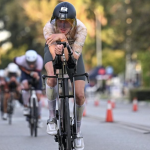
Drafting has long been one of the most debated topics in triathlon. It is discussed endlessly, written about extensively, and regulated through a variety of measures. Now, Ironman and RaceRanger are taking the discussion a step further by launching a dedicated testing program to scientifically investigate the impact of different drafting variables – most notably draft zone distances – within triathlon races.
Through this initiative, Ironman aims to gain a deeper understanding of how draft zones influence race dynamics and course density across its events.
Collaboration with Aerodynamics Expert Marc Graveline
For this project, Ironman is working closely with aerodynamics expert Marc Graveline, a former technology executive at companies such as HP and IBM, and a pioneer in aerodynamic measurement tools. Graveline, himself an active triathlete, has previously collaborated with several professional cycling teams on aerodynamics.
“I’m excited to work with Ironman, RaceRanger, and professional athletes to apply technology that can accurately measure and analyze the impact of draft zone distances,” Graveline said. “The data will be processed through advanced models that combine historical riding data with key factors such as overtaking times and positioning, leading to a deeper understanding of how drafting affects athlete performance.”
Testing with Six Professional Triathletes in Tucson
An initial test was conducted earlier this year in June to collect baseline data and refine parameters for a more extensive test campaign taking place this week in Tucson, Arizona. Before the group testing begins, each participating athlete’s aerodynamic drag (CdA) is measured individually.
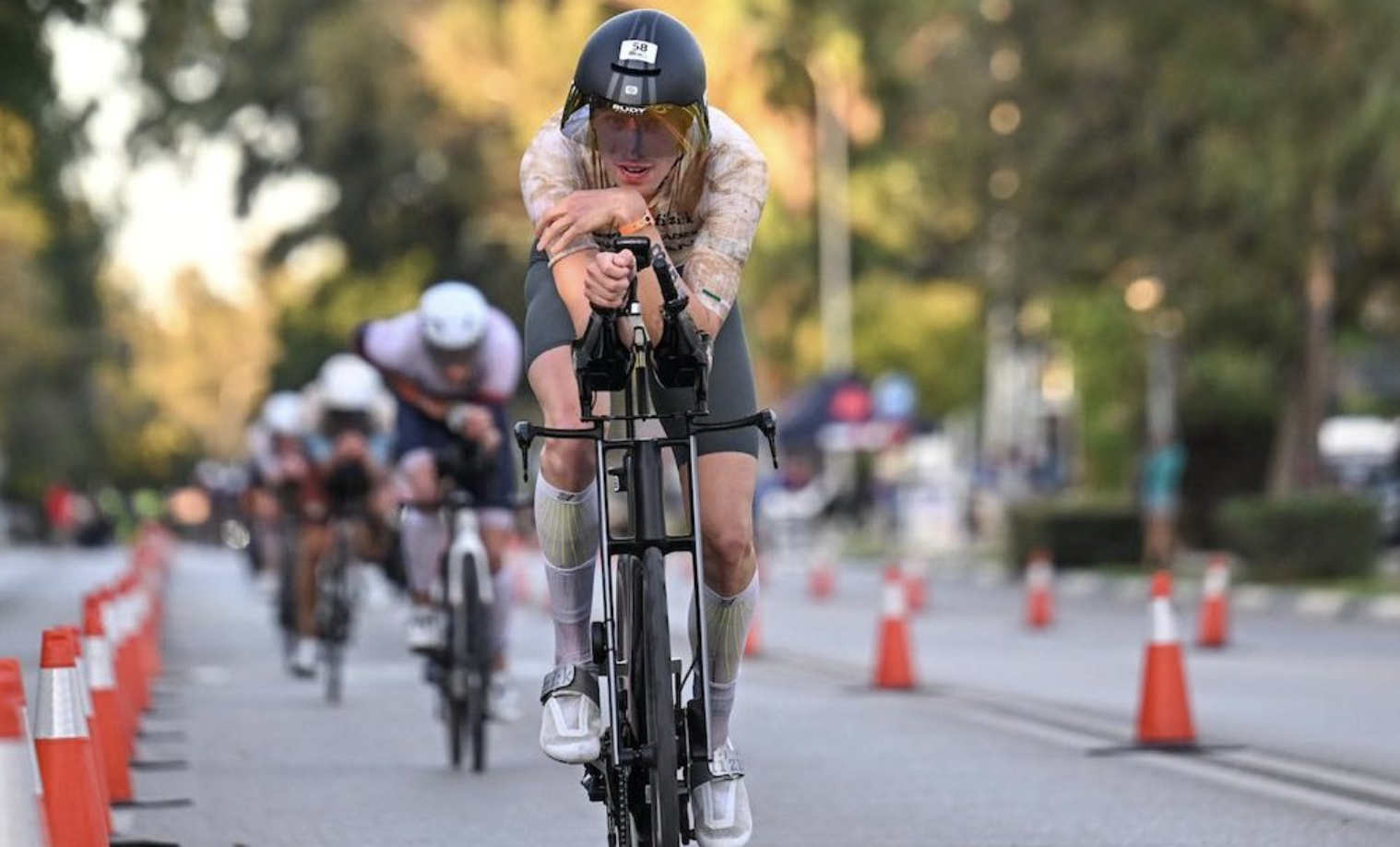
Six professional triathletes are taking part in the testing, with data collected across multiple test runs at 70.3 Ironman race intensities and power outputs. The bikes are equipped with sensors that record power, speed, wind conditions, air density, and gradient.
RaceRanger technology helps athletes maintain precise test distances and records any variations. Multiple runs are conducted at following distances of 12, 16, and 20 meters. Riders rotate positions during the tests to analyze how body size and rider placement affect power demand. The collected data is then compared against baseline CdA measurements to calculate power savings by position and distance. These results are extrapolated to other race speeds, after which it will be determined whether additional testing is required.
Additional Testing During Races in 2026
Ironman also plans to conduct further testing during live races in early 2026 to validate the findings under real-world competition conditions. The ultimate goal is to determine an optimal draft zone distance that can be applied consistently across all Ironman events, for both professional and age-group athletes.
Operational factors such as course density, start procedures, and logistics will also be considered. Any potential changes – whether to permitted draft distances or overtaking times – will be communicated transparently.
“Before 2015, draft zone distances in triathlon varied by country and federation, typically ranging from 7 to 10 meters,” Ironman explained. “To create a consistent race experience for professional triathletes, Ironman introduced its first global competition rules in 2015, setting a 12-meter draft zone for professionals.”
Since then, technology has evolved significantly, including the introduction of anti-drafting solutions such as RaceRanger. Meanwhile, Challenge Family implemented a 20-meter draft zone, which many professional athletes believe leads to an even fairer race dynamic. That system has since been adopted by other organizations as well.