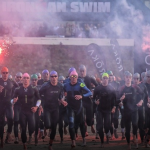
Ironman has published its international participation figures for 2025, revealing continued global growth and a clear shift toward a younger athlete base after a season that featured 148 Ironman and Ironman 70.3 races worldwide.
Across the series, more than 250,000 race registrations were recorded in 2025. Ironman reports a 10 per cent year-on-year increase in first-time participants, underlining the sport’s ability to attract new athletes at scale.
A standout trend in the data is the rapid rise in younger competitors. Participation among athletes under the age of 30 grew by 35 per cent, while the 30–34 age group remained the largest category for the second year running. Ironman also noted that the number of first-time participants under 30 has more than doubled compared to 2019.
The shift is especially notable at the full-distance level, where participation from under-30 athletes increased by 46 per cent compared to the previous year. The changing demographic is also reflected at the elite end of the sport, with Norway’s Casper Stornes (28) and Solveig Løvseth (26) claiming the men’s and women’s Ironman World Championship titles in 2025.
Female participation continued its upward trajectory, making 2025 one of the strongest years on record. Nearly 49,500 women registered across Ironman and Ironman 70.3 events, accounting for 22.5 per cent of the global athlete base and representing a 7 per cent year-on-year increase.
Women made up 17 per cent of Ironman competitors, a 10 per cent rise year-on-year, while female participation in Ironman 70.3 reached 25 per cent, up 5 per cent. Growth among younger women was particularly strong, with registrations from women under 30 increasing by 36 per cent. The 25–29 age group alone saw approximately 44 per cent growth year-on-year. For the first time, Ironman reported that the average age of female athletes dropped below 40.
Growth was also widespread across regions. In the Europe, Middle East and Africa (EMEA) region, countries including the United Kingdom, France, Germany, Belgium, the Netherlands and Denmark all recorded record participation levels in 2025.
France emerged as a key growth market, overtaking Germany as the second-largest triathlon market in Europe. Athlete registrations in France rose by 25 per cent, while international participation increased by 31 per cent. New and established events contributed to the surge, with Ironman 70.3 Les Sables d’Olonne–Vendée and Ironman 70.3 Nice both selling out in record time.
Demand remains strong heading into the 2026 season. Ironman reports that 32 Ironman and Ironman 70.3 races are already sold out, including 11 of the 14 early-season EMEA Ironman 70.3 events scheduled between February and June.
To accommodate continued growth, Ironman is adding new races in France, Spain and Italy, alongside the return of Ironman Vichy and the debut of Ironman 70.3 Alghero in Sardinia. December will also see the first full-distance Ironman event in the Middle East, with the launch of the Experience Oman Ironman triathlon.
In North America, the average age of participants continued to decline. The average Ironman athlete age dropped from 42.5 to 40, while Ironman 70.3 decreased from 41 to 39. Participation in the 18–29 age group rose by 23 per cent for Ironman and 29 per cent for Ironman 70.3.
Latin America also experienced strong momentum, supported by new events in Paraguay, Colombia, El Salvador, Chile and Argentina. Mexico remains the most represented nation, accounting for nearly a quarter of all athletes. Year-on-year growth was particularly strong in Colombia (up 24 per cent) and Costa Rica (up 50 per cent).
In Asia, Ironman continues to expand with events across Malaysia, India, China, Japan, the Philippines, Taiwan, Thailand, Korea and Vietnam. New additions for 2026 include the first full-distance Ironman in Vietnam, Ironman Vietnam, as well as Ironman 70.3 Hengqin in China and the return of Ironman 70.3 Colombo in Sri Lanka.
Oceania also remains a strong market, with sell-outs reported for Ironman 70.3 Melbourne and the Ironman Western Australia Asia-Pacific Championship.
Ironman says it will continue working closely with younger athletes, emerging markets and national federations to create pathways from other endurance sports and support inclusive, long-term growth across the global triathlon community.