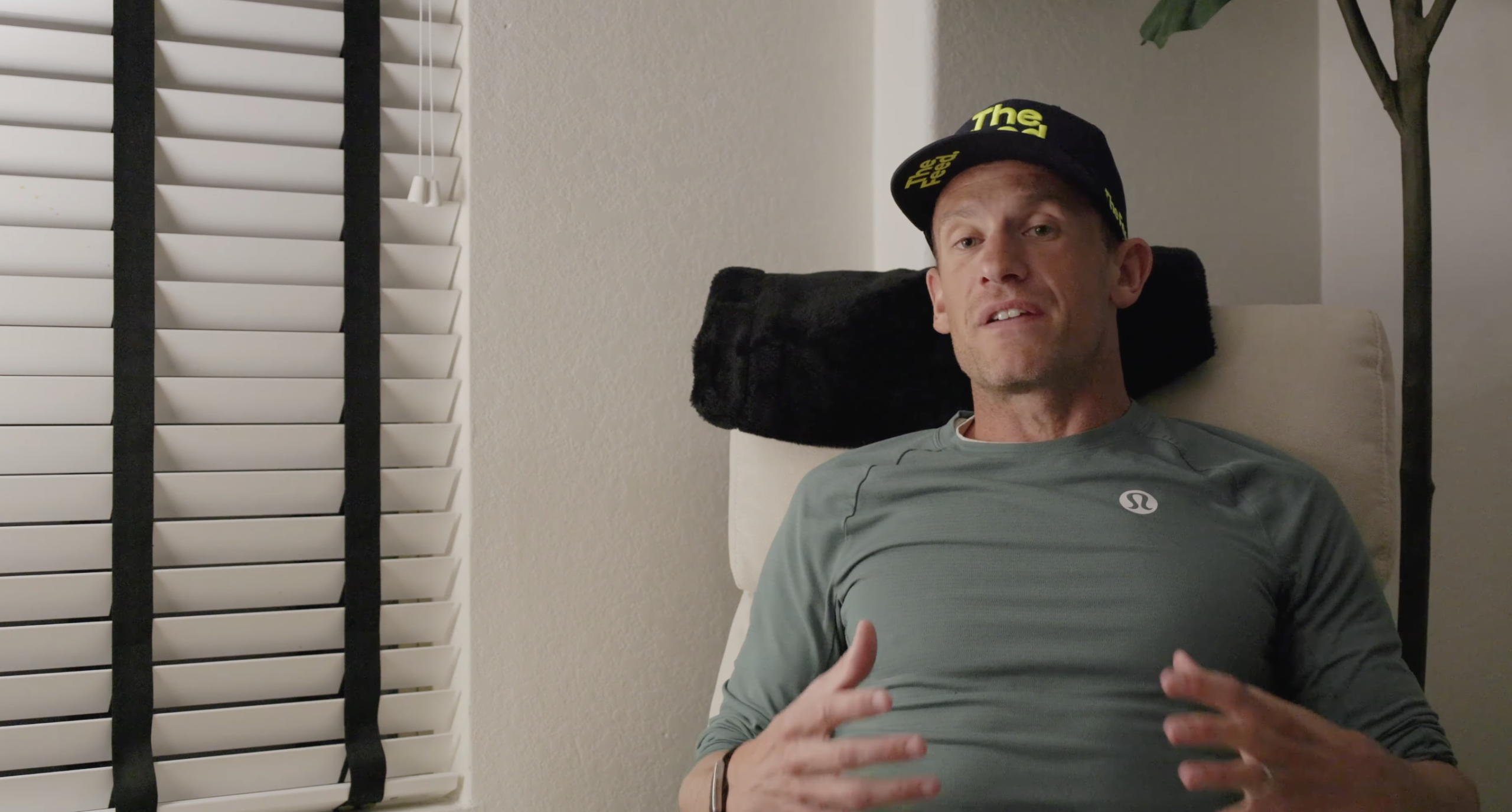
In a recent YouTube release titled “A Message to Ironman,” Canadian triathlon great Lionel Sanders, issues a heartfelt and timely appeal to Long Distance organizer Ironman. This isn’t just another social-media rant; it’s a clarion call from a seasoned pro who has lived and breathed triathlon at the highest level – and still does – and now seeks constructive dialogue on how to evolve the sport.
Sanders, widely respected for his fierce competitiveness and raw honesty, has always been unafraid to speak his mind. With multiple podiums and years of elite racing under his belt, he brings a voice of experience few can match. In his growing catalogue of YouTube content – which includes training updates and race debriefs – this latest video stands apart because it isn’t merely about his own performances; it’s about the future of fair competition in Ironman races.
At the core of Sanders’s message is a concern shared by many professionals: the way drafting is handled in professional Ironman racing. At the elite level, where athletes race at astonishing bike speeds and margins of victory can be razor-thin, small technical rules can have outsized effects on outcomes. Sanders explicitly addresses this dynamic, arguing that the current systems and interpretations may not be giving the sport the fairest possible stage for its best athletes.
It is worth noting that Challenge Family races have long used a 20-meter draft rule, providing a clear buffer on the bike leg that is relatively easy to enforce. By contrast, Ironman and many other organizers typically enforce a 12-meter draft zone, which can be harder to monitor consistently, sometimes leading to disputes and uneven enforcement. This broader context highlights the challenges of applying drafting rules fairly at elite levels while maintaining competitive integrity.
Sanders’s tone throughout the video is constructive rather than combative. He acknowledges the value of Ironman as an institution – one that has defined long-distance triathlon for generations – while urging those at the helm to listen and respond to legitimate concerns from the athletes who make the sport what it is. That duality – respect for tradition coupled with a demand for progress – makes his message powerful and unifying rather than divisive.
This is not an isolated grievance. A broader cohort of professional triathletes has voiced concerns over drafting rules and enforcement, highlighting the need for clarity and fairness in the modern racing environment. That broader context gives Sanders’s message weight: it’s part of an ongoing conversation about ensuring elite competition reflects both athlete skill and equitable conditions. Recently, Ironman conducted tests on draft zones, in which Lionel Sanders also participated.