Athletes lining up for an Ironman or Ironman 70.3 in 2026 will need to rethink their race-day tech setup. The global triathlon organizer has updated its competition rules to explicitly prohibit any form of on-course photo or video recording – a move that effectively bans GoPros, smart glasses, and mid-race smartphone content creation.
A Clearer, Stricter Policy
Communication devices have long been regulated in Long Distance triathlon. Two-way radios were already off-limits, and back in 2017 Ironman adjusted its rules to reflect the growing use of smartphones and smartwatches. Athletes were allowed to carry devices for tracking and data purposes, provided they did not use them in a “distractive manner,” such as calling, texting, posting on social media, or taking photos.
The 2026 update removes any remaining grey area.
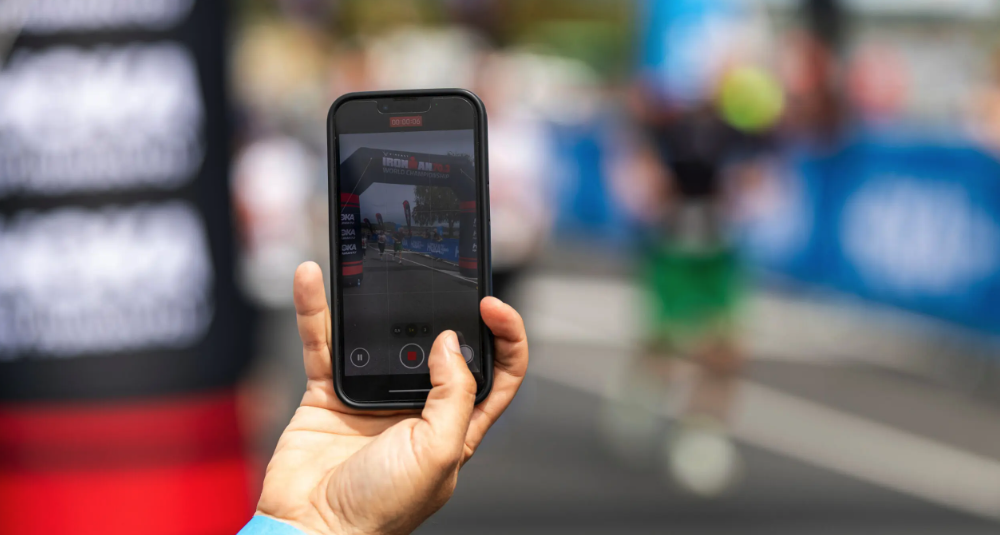
Under the revised rule, using any device – including phones, cameras, video cameras, or recording-enabled glasses – to capture images or video during the race is strictly forbidden. Athletes found doing so will face disqualification.
This means no selfies on the run course, no finish-line livestreams, and no bike-mounted action cameras documenting the day.
Why the Change?
Ironman states the update is designed to protect athlete safety, fairness, and the integrity of competition. Recording devices can create distractions, compromise bike handling, or interfere with other competitors – particularly in crowded race environments.
By removing ambiguity around video capture, officials aim to ensure that all athletes compete under the same focused conditions.
What’s Still Allowed?
Despite the stricter stance on recording, phones are not entirely banned from Ironman and 70.3 events. Athletes may still carry them – but only within defined limits.
GPS and Tracking
Navigation and GPS tracking functions remain permitted, provided the device is securely mounted or stored and not actively manipulated while moving. Live location sharing with family or support crews is still allowed.
Bike Computer Use
Using a smartphone as a bike computer is acceptable if it is firmly attached to the bike. Handling a phone while riding, however, remains unsafe and illegal.
Emergency Situations
In the case of an accident or medical emergency, athletes may use their phone to contact emergency services – but only after stopping. Using a phone while riding or running is prohibited for safety reasons.
What’s Off-Limits?
While you can carry a phone, you cannot actively use it for:
- Making or receiving calls
- Sending or reading text messages
- Playing music (headphones and speakers are also banned)
- Posting on social media
- Taking photos
- Recording video
Even a quick celebratory selfie could technically end your race result.
For many coaches, this reinforces a long-standing recommendation: train and race without digital distractions to simulate competition conditions.
How Does This Compare to Other Series?
Ironman is not alone in regulating device use. Other major organizers such as PTO, Challenge Family, and Supertri enforce similar restrictions, requiring devices to be safely stored and not actively used during competition.
The Takeaway
The era of athlete-shot race footage at Ironman events is effectively over – at least during competition hours. Participants will need to rely on official race photographers and spectator content to relive their day.
For athletes chasing a personal best, Kona qualification, or simply the satisfaction of the finish line, the updated rule serves as a reminder: on race day, performance takes priority over content.