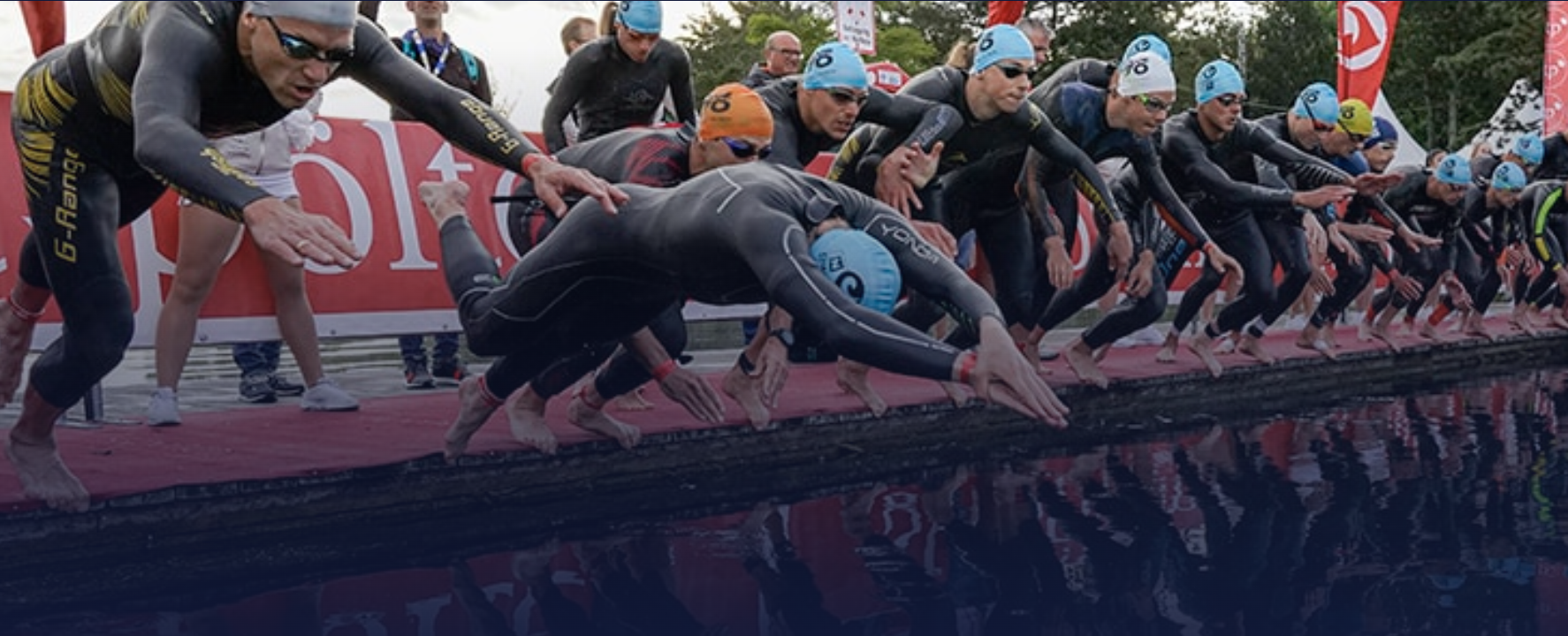
The European Middle Distance triathlon calendar is rapidly hitting its stride, but this weekend’s Challenge St. Pölten presents the first true mid-season litmus test for the continent’s premier fields. Lower Austria’s flagship event has never been a race for passengers; its iconic two-lake swim, punishing rolling bike course, and unforgivingly exposed run legs demand absolute tactical clarity.
This year, the narrative heading into Sunday centers on two distinct dynamics: a dominant solo force attempting to defend an undefeated streak in the women’s race, and a chaotic, wide-open tactical battle brewing on the men’s side.
The Women’s Race: Can Anyone Disrupt the Pohle Momentum?
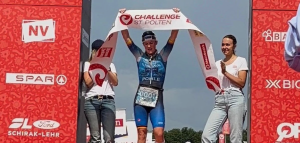
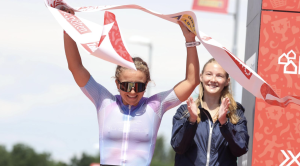
In professional racing, momentum is a tangible currency, and right now, Germany’s Caroline Pohle is wealthy. Pohle enters St. Pölten as the undisputed athlete to beat, carrying the psychological and physical edge of back-to-back victories. Her dominant display at Challenge Mogán-Gran Canaria proved her early-season fitness, but it was her emotional, tactical masterclass at The Championship in Šamorín last weekend that solidified her status at the top of the European hierarchy.
The central question for Sunday is recovery. Back-to-back middle-distance racing at this level takes an immense physiological toll. Pohle is betting on her current wave of form to carry her through, but the field behind her is designed to exploit any lingering fatigue. With more than 25 pro women on the start list, the depth is substantial enough to ensure an honest race from the cannon.
Chief among the challengers is the Netherlands’ Diede Diederiks, an athlete who thrives when races become battles of attrition and who possesses the late-race run speed to punish anyone who over-biked. Furthermore, the Austrian duo of Anna Pabinger and Lisa-Maria Dornauer bring invaluable course familiarity and local support – factors that cannot be overstated on a bike course as technically demanding as St. Pölten. If Pohle is even slightly off her game due to last weekend’s exertions, this collective field is highly capable of forcing a tactical upset.
The Men’s Race: A Tactical Chess Match
Conversely, the men’s race lacks a single definitive protagonist, offering instead a fascinating clash of styles and motivations. Germany’s Finn Grosse-Freese wears the target as the highest-ranked man in the field at World No. 38. Coming off a solid fifth-place finish at Challenge Salou-Costa Daurada, Grosse-Freese represents the benchmark for consistency. He has the tools to control the race, but he will not have the luxury of a passive pack.
The real wildcard is his compatriot, Frederic Funk. By his own high standards, Funk’s seventh-place finish in Šamorín last weekend was a disappointment on paper. However, the performance metrics suggested his raw power output was right where it needed to be. Funk is a ferocious cyclist who relishes tough terrain; if he can replicate those power numbers on the rolling Austrian roads, he could easily tear the race apart before T2.
Looking to shatter the projected German dominance is a potent British contingent. Josh Lewis and Hannes Butters arrive as the quintessential dark horses of the men’s field. Free from the pressure of the favorite tag, both possess the swim-bike firepower to mark any aggressive moves made by Funk or Grosse-Freese, setting up what promises to be a highly volatile and unpredictable run discipline.