For triathletes, the road is both a sanctuary and a source of vulnerability. While bike technology has relentlessly chased aerodynamics, weight reduction, and power efficiency, athlete safety on open roads has largely relied on reactive measures – better helmets, brighter lights, and rear-facing radar.
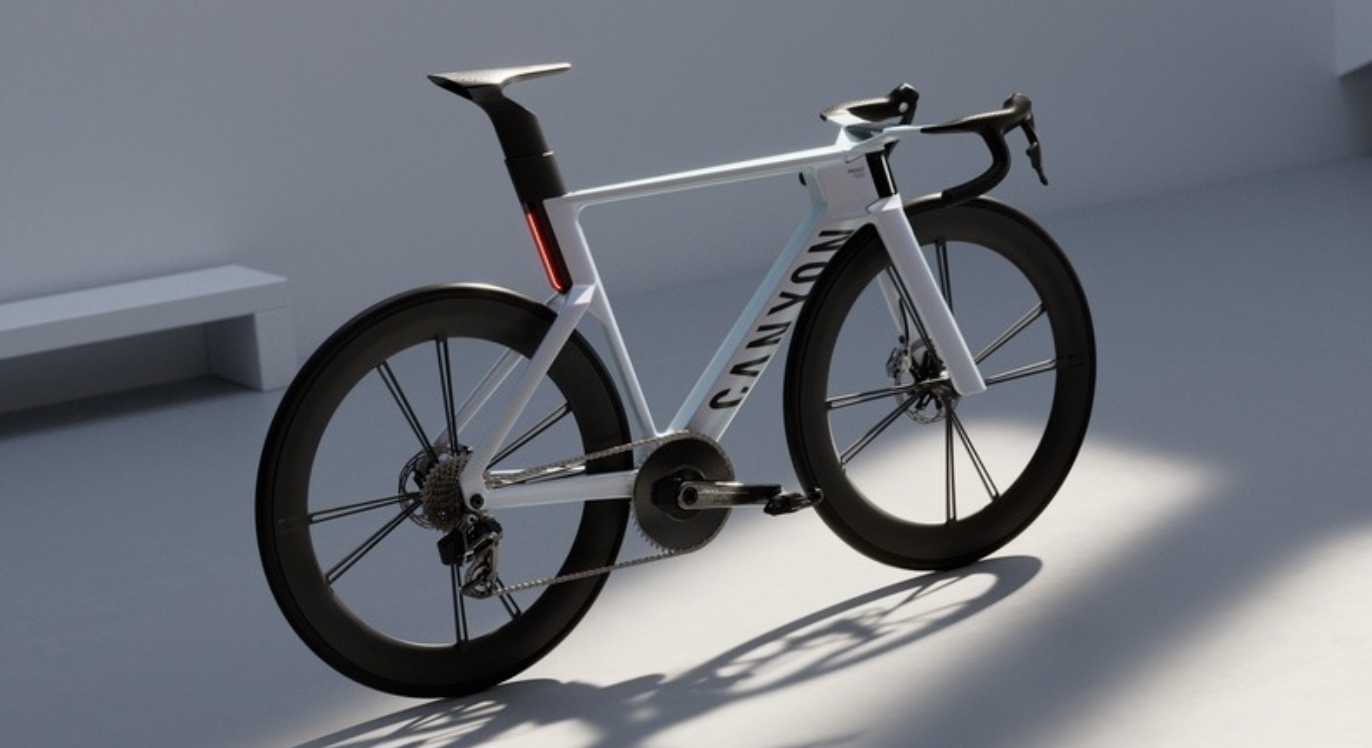
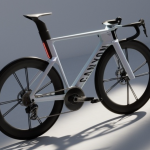
Direct-to-consumer bike manufacturer Canyon wants to change that narrative. Ahead of Eurobike in Frankfurt, Germany (June 24–27, 2026), the company has unveiled Canyon Predict, a road bike safety prototype designed to shift safety from reactive to predictive. Alongside it comes the Stingr Smart, an augmented-reality companion helmet.
While initially showcased on a premium road frame, the implications for long-distance triathletes – who spend countless hours training solo on public roads – could be significant.
Edge AI and 360-Degree Sensing
At the core of the Canyon Predict concept is a multi-modal sensing suite that creates a real-time situational model of the rider’s environment. The system integrates:
- Optical cameras and radar signals to track traffic and road hazards.
- Distributed sensors, including a multi-dimensional motion sensor housed inside a DT Swiss wheel hub to monitor stability and surface conditions.
- Local Edge AI processing, which handles all data onboard. By avoiding cloud reliance, the system eliminates internet dependency and minimizes processing latency when milliseconds matter.
Information is fed directly to the rider via an integrated handlebar data screen and the Stingr Smart helmet’s drop-down visor, which features a heads-up display (HUD).
From Alerts to Hardware Activation
When the system identifies a hazard, it calculates a risk score and alerts the rider through a combination of visual HUD cues, directional lights on the lever hoods, and haptic feedback.
Furthermore, the prototype features “swarm intelligence,” allowing a group of riders to share real-time hazard alerts seamlessly – a feature that could alter group training dynamics. For critical, unavoidable situations, the concept introduces active hardware mitigation: the system can automatically drop the electronic dropper seatpost, lowering the rider’s center of gravity to maximize stability and control before an imminent impact.
The Reality of Road Safety
The push for predictive technology comes amid sobering statistics. Canyon highlighted data from the German Federal Statistical Office showing that in 2025, cyclists accounted for one in six road fatalities – a 20.6% increase compared to 2015. While automotive safety has advanced rapidly, bicycle safety infrastructure has struggled to keep pace, leaving athletes increasingly vulnerable.
Professional athletes have noted the potential utility of these advancements. Kasia Niewiadoma-Phinney, Tour de France Femmes winner for CANYON//SRAM Racing, commented on the technology:
“I train and race on the road a lot, and there are plenty of times where data about my bike and any other safety measures about other road users would be welcome. Improving how safe you feel on the road and helping you react to changing circumstances benefits everyone.”
The Triathlete’s Perspective
For the triathlon community, safety remains a primary barrier to training. Aero positions naturally limit peripheral vision, and the speed differentials between a triathlete on a time-trial bike and surrounding traffic require split-second decision-making.
While the Predict concept is currently integrated into a traditional road frame, the translation of Edge AI, HUD helmets, and predictive hazard tracking to the multisport world could offer solo athletes an invaluable extra layer of awareness.
Canyon will be showcasing the Predict prototype and Stingr Smart helmet at Messe Frankfurt (Hall 11.0, Stand B50) during Eurobike. While there is no timeline for a commercial release, the prototype represents a clear indicator of where the industry looks to innovate next: prioritizing the rider’s survival just as much as their speed.